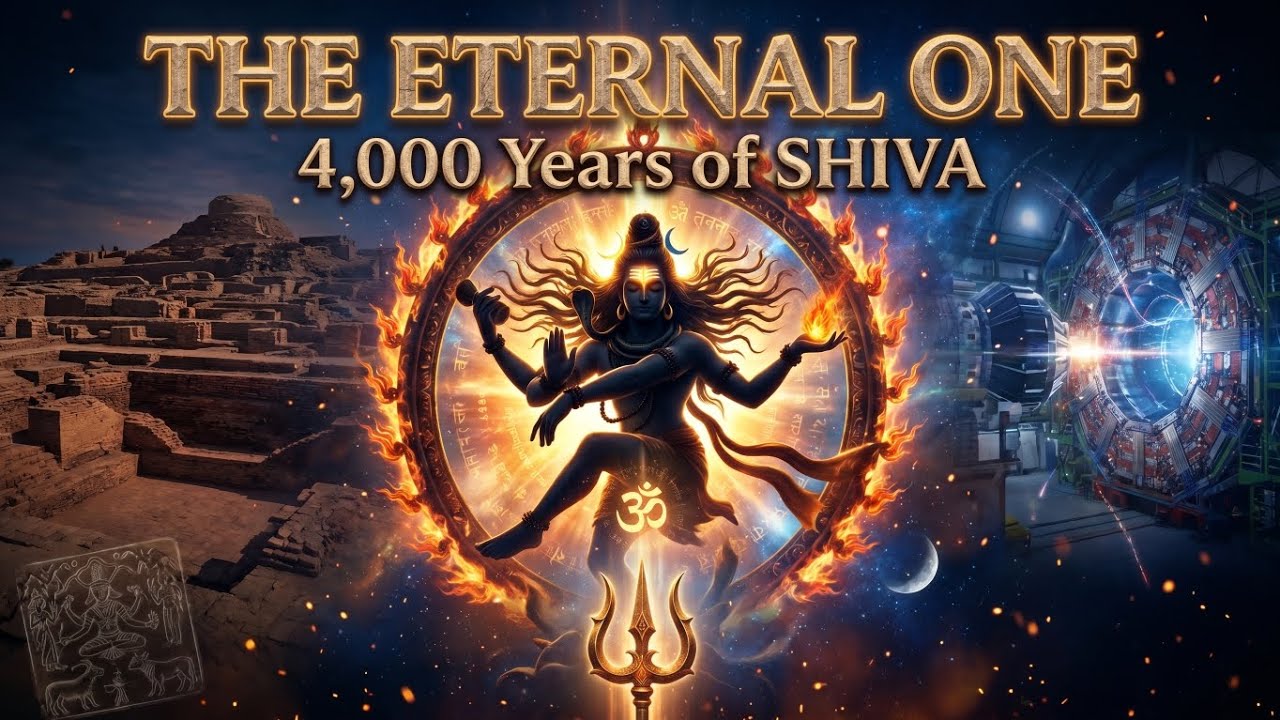
I’ve talked about Shiva occasionally as one of my patron deities, and I’ve also given a little info on him in my “new practice tour” already here, but I also really wanted to give him his own topic.
There’s a lot of misconceptions about Shiva - particularly in the West.
In the East he is loved and respected - in the West he is feared. Some genuinely believe he is a manifestation of evil. I’m here to eliminate those evil misconceptions - most of which is due to mistranslation and Eastern-Western culture shock.
Perhaps I can clear a path in the smoke for you - dear reader, on this misunderstood god…
Some of the expansion content that I will post on this topic will be pure visual - some will be audio, some might be in written form as well.
My grand message here is that Shiva isn’t evil. He’s only misunderstood. He was, is, and will always be a divine being. A manifestation of the creative and transformational principles of reality - of grand cosmic timing - and those principles in the self.
Thank you for reading. Join in on the conversation if you want.
Ask me any questions, but please… be respectful.
Om Namah Shivaya  ॐ नमः शिवाय
3 Likes
As you know I’m in the exact same boat with Lilith! It’s hard having a maligned deity!
2 Likes
Indeed! And the more complex the Deity, the more varied the way the Deity is presented,
the harder it is. As I know all too well. I present my Patron Saint with two of Her aspects;
Mother and Queen. Nothing ‘satanic/demonic’ to me. Other people, well they have their own
Aspect relationships with Her, it’s a lot of projection, for them AND for me, I just choose kindness.
Can you bring out some of the more ‘kindness’ or ‘peaceful’ aspects of Shiva to show us?
1 Like
Oh I most certainly can! He has 64 Hindu forms after all!  (I’m not counting his Buddhist forms. That would be too much…)
I will focus on his more peaceful forms first, for real! I think that would be the best way to start. 
A lot of this is due to mistranslation and Eastern-Western culture shock… The idea that he’s evil at all is entirely a Western invention. In the East his presence is widespread, even if it’s in alternate forms. In one way or another, he’s both loved and respected there.
You would think if he were actually evil, that there would a universal agreement on it, no?
2 Likes
Sensational Sunday Wren,
I hear ya, I have been delving into Kali. Lady Gene 
2 Likes
Well, somebody HAS to be the ‘bad guy’, eh? Lucifer is actually just a Human King in the
original text, look what they did to him! HaSatan isn’t even a proper name, it’s a title.
If you look at him in Job he’s just an angel with an unpleasant task! Now are there
Evil entities? Yes, there are. But they’re neither Fallen Angels nor Deities.
2 Likes
Sensational Sunday Wren,
 Here we go again…
Well, look at the name, Lucifer, Light  . So, he can’t be all that bad.
Lady Gene
2 Likes
Well, going by the OP image, that many ‘arms’ indicates MANY aspects.
Personally, I stay away from Lucifer because of the misunderstandings, I prefer to use
the Hebrew Angelic names they have more meaning & less Western baggage & errors.
2 Likes
Sensational Sunday Sedim,
I try to stay with the oldest gods/goddesses that “speak” to me. I figure, the older they are, they are probably more correct. I use Mesopotamian names or Native American names when possible.
Lady Gene
1 Like
Absolutely, Names have MUCH power in them, and names you Call on most of ALL!
1 Like
YES. But also no. Multiple arms in Hindu and Eastern symbolism doesn’t necessarily mean “many aspects.” (It can mean a lot of other things though.) But I knew that’s how that image was going to come across to Western viewers - that’s why I used it.
Eastern symbolism is often wildly different from the West. This is part of the “translation” problem I’ve been talking about. I’m going to have to break some of that down.
But he does have many aspects as well. 64!
1 Like
YES. And Shiva’s oldest form Rudra was wildly unpredictable. It would be kinda nuts if I called him by that name. Rudra was often called the Mad God. When he wasn’t tearing up the countryside, he was healing people! 

Ah, True Chaotic Neutral
(Yes, I see the world thru a D&D Handbook!)
1 Like
Your title is quite contradictory. You’re trying to present Shiva in a more positive light, yet you give him “the God of destruction,” and that phrasing is exactly what instills fear. It doesn’t come across as warm. Plus, Shiva isn’t a God of destruction, his main field is something else. If Western portrayals often misrepresent him, you can treat him fairer by using a better title.
1 Like
I originally gave this topic that title because it’s his main title as part of the Hindu Trimurti.
Yes, there’s more to his energy than destruction, but I will be explaining that in some detail in follow-up expansions to the main post.
1 Like
Hindu and Eastern symbolism and philosophy is very much alien to the Western mind,
look at my assumption about the many arms. I would be completely lost in such a world,
I’m exploring Islam right now for the exclusive purpose of understanding Jinn better, and
I’m so totally lost with that religion it’s like it’s from a different planet. So have patience.
1 Like
That isn’t his “official” title, but that’s your belief that his “official title” is God of destruction.
Since he guided you through the content, there’s actually a reason for that.
1 Like
Indeed - this video explains some of that! (After the intro.)
A very brief introduction to Shiva:
(Forgive the fact that it’s AI! It was the best short intro on him I could find.)
A few things to clarify in this video:
Parvati is the wife of Shiva. She is just about as complex as he is, but she is widely loved and she generally doesn’t have the same representation problems he does…
“Shakti” is the Hindu term for the feminine principle in creation and “shiva” can also be used as a term for the masculine principle. In this context, these terms are similar to the concept of Yin and Yang in Chinese philosophy. (This is a very limited explanation though.)
Ardhanārīśvara is one of the many forms of Shiva and is a form of Parvati.
Mount Kailash is believed to be the abode of Shiva. It is an intensely sacred place in both Hinduism and Buddhism. (I may actually get into some of his Buddhist lore later.)
Finally, not all of the beliefs in this video are widely held by Hinduism as a whole. Hinduism is a religion with a wide range of sometimes conflicting beliefs. More specifically, it’s explaining common beliefs in Shaivism - the branch of Hinduism that exalts Shiva.
1 Like
Well! Halahala rang a bell in my mind, so I chased rabbit down the hole and came across Amitra.
Poison transformed into something is a major element in the Dune saga, here’s what I found:
This mythological concept is what Frank Herbert referenced when creating the Water of Life in Dune — both are transformative substances that grant profound knowledge and power when properly mastered, though both also carry the risk of death if consumed incorrectly.
(I’ve been a Dune fan forever, the new adaptation is banger, let me tell ya. Gotta get it)
1 Like